
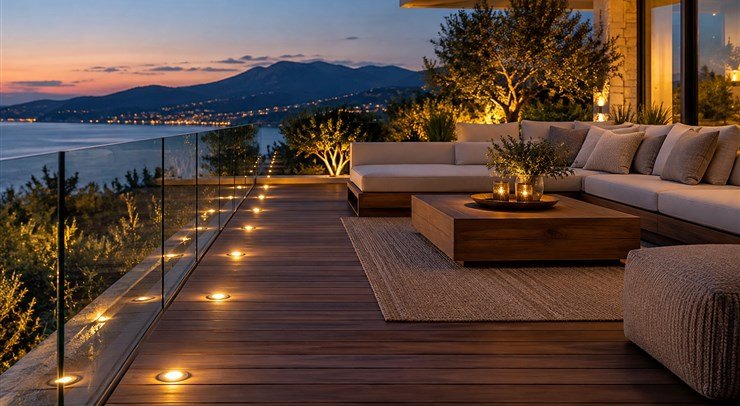
LED deck lights are used in patios, terraces, balconies, boardwalks, pool surrounds and outdoor hospitality spaces. They are small, easy to display and often ordered in groups, which makes them attractive for importers and landscape lighting distributors. They are also installed into wood, stone or composite materials, so a product that looks good in a catalogue still needs to be checked for fit, sealing, heat and maintenance.
This guide helps wholesale buyers choose a practical LED deck light range. It covers application, round and square formats, recessed installation, light output, material selection, wiring, packaging and sample approval. The goal is not to choose the most expensive model. The goal is to choose a model that installers can fit consistently and customers can reorder with confidence.
Where deck lights are normally used
Deck lights can mark the edge of a terrace, outline a walkway, highlight a step or create a calm atmosphere around a pool. In hotels and restaurants, they can help define outdoor seating without filling the space with tall fixtures. In residential projects, they are often used as small decorative points in timber decking or stone paving.
Start by asking what the light is expected to do. Is it mainly decorative, or should it help people see the edge of a deck? Will people walk directly over the light? Can water collect around the installation? Will the product be near chlorine, salt air, cleaning chemicals or sprinklers?
- For timber terraces, confirm the hole saw size, body depth and cable route.
- For stone paving, check the cutout tolerance and whether a sleeve or box is required.
- For pool surrounds, discuss water exposure, materials and the complete low-voltage installation.
- For commercial projects, ask how the fixture can be replaced without damaging the surrounding surface.
Include these details in your enquiry. A factory can then recommend the correct housing and cable rather than quoting a standard sample that may not fit the project.
Round or square: choosing a sellable product family
Round deck lights are familiar and easy to position in curved or irregular layouts. Square lights can look more architectural when installed beside straight boards or modern paving. Neither shape is automatically better. The choice should match the customer’s design language and the tools used by the installer.
For a wholesale range, coordinated shapes can be more valuable than a very large number of unrelated designs. Consider offering one round model, one square model and perhaps two finishes. Your sales team can explain the difference quickly, and customers can choose a visual style without learning a complicated product list.
Ask for a dimension drawing that shows the visible trim, body diameter or width, cutout and installation depth. A few millimetres can make a difference when the installer prepares holes in expensive timber or stone. Also confirm whether the light is designed to sit flush. A lip that stands above the deck may create a trip risk or collect dirt.
Recessed installation and drainage
Recessed deck lights are exposed to the surface around them. Rainwater, washing water and condensation can remain around the bezel if the drainage is poor. The product specification should explain the recommended cutout, sleeve, drainage layer and cable path.
Do not assume that an IP rating means the fixture can be placed into any closed hole. The surrounding construction may trap water even when the housing is well sealed. Ask the factory whether the product needs a drainage pot or an open route below the body. Confirm the minimum distance from standing water and whether the cable gland must remain in a particular position.
For a distributor, an installation diagram is an important selling tool. It helps contractors understand that the light, cable and surrounding surface form one system. It also protects your business from customers using a decorative deck light in an application that the product was never designed for.
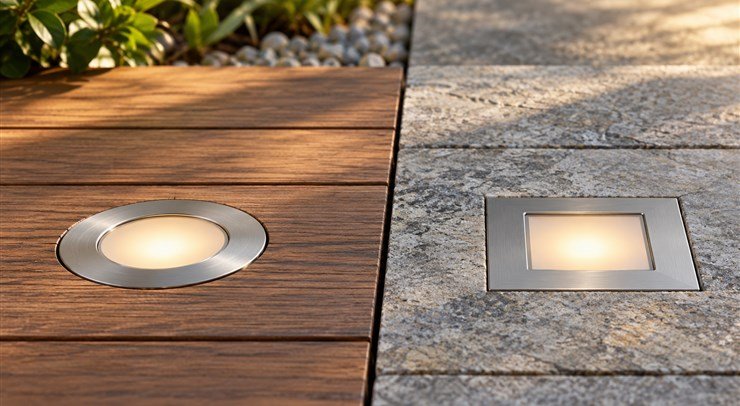
Compare the visible trim, cutout, body depth and surface material before approving a deck light.
Light output, glare and spacing
Deck lights usually work best when the light is controlled and comfortable. A bright point in the floor can be distracting when a person looks across the terrace. Frosted lenses, recessed bodies and downward light distribution can reduce glare. For a walkway, the aim is often to show the edge and create rhythm rather than produce a large amount of general illumination.
Ask for a real installation photograph and test the sample at night. View it from the seating area, from the path and from the top of a step. Check whether the lens is too bright, whether the colour is even and whether the light produces unwanted reflections on glass or water.
Spacing depends on the application. Closely spaced lights can create a continuous line around a deck, while wider spacing can work for individual step markers. Give your customers an example range rather than promising one spacing for every design. The surrounding surface, brightness and desired mood all matter.
Colour temperature and consistency
Warm white light is common for patios, hotels and residential terraces because it feels comfortable with wood, stone and planting. Neutral white can suit a commercial or contemporary project. If the product is used around a pool, the light should be considered with the pool colour and other underwater fixtures.
Confirm the CCT, CRI and colour tolerance. A line of deck lights can look uneven if one unit is visibly cooler or greener than the others. Sample approval should include the exact LED board and diffuser. If you stock two colour temperatures, keep the product codes and labels clearly separated.
When describing the product, explain the intended effect in simple language. Customers often understand “warm guidance light for terraces” more easily than a list of electrical terms without an application example.
Materials, finish and mechanical strength
The visible trim may be stainless steel, aluminium or a coated finish. The body may use aluminium or another material according to the design. Ask which material is used for the trim, housing, screws, gasket and cable gland. A product that looks premium from above should also have a protected underside and a reliable connection.
If people will walk directly over the fixture, ask the factory to define the intended load condition. A garden deck and a commercial boardwalk do not have the same mechanical requirement. Do not use a general word such as walk-over without understanding the installation base and load path.
Inspect the lens support and trim after the product has been installed. The face should sit level with the surface and should not move when lightly pressed. Check whether the finish scratches easily when the product is handled with normal tools.
Electrical system and service access
Confirm input voltage, driver type, cable length, connector, power and the number of fixtures supported by one driver. Some deck lights use low voltage with a remote driver, while other products have a different system. The wiring plan must be clear for the project market.
Ask how a failed unit can be replaced. Can the light be lifted from the sleeve? Is the connector accessible? Does the driver remain dry and serviceable? These questions are important for a hotel or restaurant where a damaged fixture may need to be changed without closing the whole terrace.
Keep a wiring diagram with the quotation. If the product is sold under your own brand, make sure the model code, voltage and connector information on the label match the approved specification.
Packaging and sample approval
Deck lights are compact, but the lens and trim can be scratched by loose screws or metal parts. Ask for individual protection, an accessory bag and a carton layout that prevents movement. Confirm the carton quantity and whether the cable is coiled without sharp bends.

Compact fixtures still need careful packaging to protect the lens, trim and cable during shipment.
Approve the sample in the actual surface whenever possible. Measure the cutout, check the flush fit, operate the light for several hours and inspect the cable entry. Use at least two or three units to see the spacing effect. Record the approved finish, CCT, driver, cable and accessories so a repeat shipment can be compared easily.
Ask the factory for the final packing dimensions and gross weight before calculating freight. A small change in carton height can affect the number of cartons per pallet and the delivered cost.
How to compare deck-light quotations
Build a simple comparison table with product code, shape, visible size, cutout, depth, material, finish, CCT, voltage, IP rating, load condition, cable, driver, accessories, MOQ, carton and lead time. Add a note about whether the sample was tested in timber, stone or another surface.
Compare total delivered value instead of only unit price. An inexpensive light may need a separate sleeve, driver or connector that makes the final cost higher. A better-protected product may reduce breakage and replacement requests. Also consider how easy it will be for your sales team to explain and reorder the product.
Common buyer questions
Can deck lights be installed underwater?
Do not assume this. A deck light needs a product and installation method designed for the actual water exposure. Pool and fountain applications should use fixtures specified for those environments.
Are brighter deck lights better?
Not always. The purpose is often guidance and atmosphere. Excessive brightness can create glare, especially when the fixture is visible from a seating area.
How many deck-light shapes should I stock?
Start with a focused family that matches your customers. One round model and one square model can cover many design preferences without creating unnecessary inventory.
What should be checked on a sample?
Check the cutout, flush fit, seal, cable, light colour, glare, heat, accessories and the ease of replacement. Test several units at realistic spacing.
Make deck lights easy to specify
A successful wholesale deck-light range combines a clean appearance with a realistic installation plan. Give customers the cutout drawing, material information, light effect, wiring details and honest application limits. When installers know exactly how the fixture fits, your product becomes easier to quote and less likely to generate a return. For coordinated outdoor LED products, see Konlight distributor support or send your deck-light requirements.
Need a Quote for Your LED Lighting Project?
Tell us what you are sourcing, and our team will reply with suitable options, pricing, and sample support.




Get Social