
 Colour temperature and colour rendering are two of the most misunderstood parts of an outdoor lighting quotation. Many buyers know they need warm white or neutral white, but they are less certain about how the choice affects a hotel garden, a stone facade, a restaurant terrace or a planting bed. For importers and distributors, a clear explanation of CCT and CRI can make a product range easier to sell and can prevent customers from ordering a light that does not suit the project.This guide explains how to choose CCT and CRI for outdoor LED lighting in practical language. It is written for overseas buyers, landscape contractors and distributors who need to compare products and prepare an application-based quotation. The goal is not to promote one number as the answer for every project. The goal is to match the light quality to the place, materials and customer expectation.
What does CCT mean?
CCT means correlated colour temperature and is measured in Kelvin. It describes the visual appearance of white light, from warmer yellow tones to cooler blue-white tones. In outdoor projects, common choices include warm white around 2700K to 3000K, neutral white around 3500K to 4000K and cooler options above that range.
Lower CCT often feels relaxed and comfortable. It can work well with timber, stone, planting and hospitality spaces. A higher CCT can look clearer and more modern, and it may be useful for service paths, commercial yards or architecture that uses cool materials. The actual impression also depends on the LED spectrum, surrounding light and the colour of the surface being illuminated.
Do not choose CCT from a catalogue label alone. View a sample on the target material and beside the other lights that will remain on at night. A warm light can look more orange beside a cool streetlight, while a neutral light can look warmer on a beige stone wall than on a white facade.
What does CRI mean?
CRI describes how accurately a light source reveals colours compared with a reference source. A higher CRI can help colours look more natural, especially for plants, food, artwork, fabrics and architectural finishes. CRI is not the same as brightness, and a higher CRI number does not automatically mean the whole product is better for every outdoor application.
For a hotel entrance, restaurant terrace or garden with carefully selected planting, good colour rendering can add visible value. For a basic service yard, the customer may prioritize efficiency, durability and cost. The right specification follows the application and the budget.
Ask the factory what CRI value applies to the complete product and whether the value is measured under the same CCT and LED configuration that will be shipped. If the customer cares about red tones or plant appearance, ask for additional colour information rather than relying on one general CRI number.
Match CCT to the application
- Warm white is often comfortable for hotels, restaurants, residential gardens, terraces and historic stone.
- Neutral white can suit contemporary facades, public paths, commercial entrances and areas that need a clearer visual environment.
- Cooler light may be requested for specific modern designs or work areas, but it should be checked carefully for glare and visual comfort.
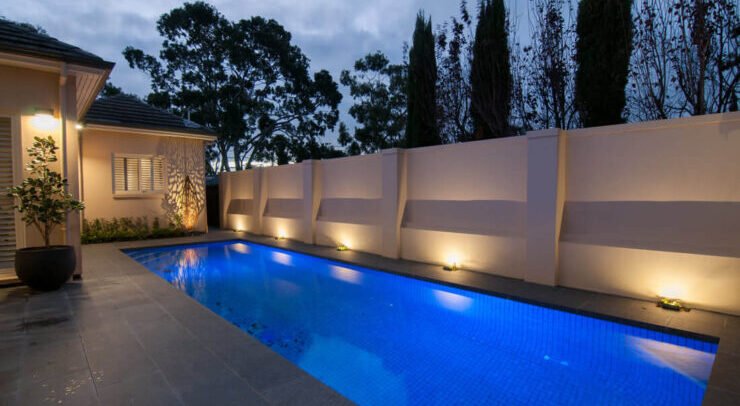
- Water features and pools should be evaluated with the surrounding architecture and the colour of the water, tile and landscaping.
These are starting points, not strict rules. A luxury resort may use warm light for guest zones and neutral light for service access. A modern hotel may use neutral facade light with warm pathway accents. A distributor should show customers how the zones can work together.
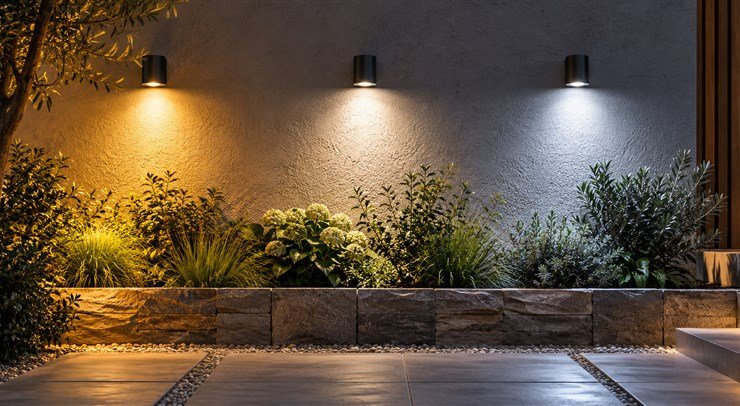
Use samples on the actual materials because the same CCT can look different on stone, plants, timber and water.
Consider the surrounding light
Outdoor fixtures rarely operate alone. A garden may be next to a road, a hotel facade may sit beside warm interior windows, and a pool may reflect blue water light onto a terrace. The surrounding sources influence how customers perceive the selected CCT and CRI.
Ask what lights are already installed and whether the new fixtures will replace or supplement them. If the project has a mixture of sources, choose a deliberate contrast or aim for a consistent appearance. Random differences are usually what make a project look unfinished.
Photograph the site at night when possible. A factory can use the image to suggest a warmer or more neutral option. This simple step is often more useful than asking for a colour temperature without any context.
Colour consistency across product families
A distributor may combine wall lights, bollards, spotlights, step lights, deck lights and wall washers in one project. Even when each product is labelled 3000K, the visual result can differ because of the LED bin, diffuser, lens and housing design.
Request samples from the product families that will be used together. Put them side by side and view them on the same surface. Check the light at startup and after it has operated for several hours. If the project is large, record the approved colour and ask the factory how it controls repeat production.
Keep the model code, CCT, CRI, LED board and diffuser information in the quotation. If a supplier changes a component, request a comparison sample before the next shipment. A small change can be visible when dozens of fixtures are installed in a row.
Glare, brightness and perceived colour
CCT and CRI do not solve glare. A warm light can still be uncomfortable if the LED source is directly visible, and a high-CRI product can still create harsh shadows if the beam is poorly controlled. Review colour, brightness, beam and mounting together.
Ask for the rated lumen output and the complete fixture wattage, but then view the product from normal eye height. A bright point in a low step light or deck light may look stronger than the numbers suggest. A wall washer may need a lower output if the facade is close to windows.
Use shields, louvers, diffusers, mounting height and aiming to control the light. The best CCT is one that fits the mood and remains comfortable for people using the space.
How to test CCT and CRI samples
Set up a simple test with the material the customer will see. Use timber, stone, a plant leaf, painted metal or a product display according to the application. Place the sample at a realistic distance and photograph it at dusk. Compare the result with the existing lights.
Check white surfaces for unwanted green, pink or blue tint. Look at red, brown and green objects because they can reveal differences that are not obvious on a plain white wall. For a hospitality project, check faces and food when appropriate. For a landscape project, look at leaves, bark and stone texture.
Record the sample’s model, CCT, CRI, driver, lens and operating time. The aim is to approve a complete configuration, not a colour temperature disconnected from the fixture.

A simple material-board test helps buyers judge colour quality in a way that matches the real project.
How to describe CCT and CRI in a catalogue
Use clear application language beside the technical number. Instead of listing 3000K with no explanation, say that the option creates warm white light commonly used for hospitality and residential landscapes. Explain that a neutral option may suit modern commercial architecture or service areas.
For CRI, state the tested or specified value and explain where it adds value. Avoid promising that one high number guarantees perfect colour appearance. If the product is available in several configurations, show which CRI applies to each model and CCT.
Include a note that the final appearance depends on surface, surroundings, optics and installation. This is accurate, useful and helps the customer understand why a sample is recommended.
Questions to ask the factory
- What CCT options are standard and what is the lead time for custom options?
- What CRI value applies to the complete fixture?
- How is colour consistency controlled between production batches?
- Does the diffuser or optic change the visual colour?
- Can matching CCT and CRI be supplied across several product families?
- What sample, datasheet or photometric information is available?
- How should a component change be approved?
Write the answers into the product specification. This prevents a later quotation from using a different LED board or colour option without the sales team noticing.
Common questions from importers
Is 3000K always warm enough?
It is usually perceived as warm white, but the final appearance depends on the LED spectrum, diffuser, materials and surrounding lights. Always check a sample for important projects.
Is a higher CRI always better?
Higher colour rendering can be useful, but it may affect efficiency, price and availability. Choose the value that supports the application and customer expectation.
Can all fixtures in a range use the same CCT?
They can be specified with the same nominal CCT, but the visual result may still vary between optics and diffusers. Compare the actual product families side by side.
How should a distributor sell CCT?
Explain the mood and application in simple language, show a real photograph and recommend a sample when the project is important.
Use colour quality as a practical sales tool
CCT and CRI become easier for customers when they are connected to the material, mood and use of the space. Help buyers compare realistic samples, keep colour information consistent and record the complete fixture configuration. For coordinated outdoor LED products with application support, learn about Konlight for distributors or send the project materials and lighting goals.




Leave A Comment