
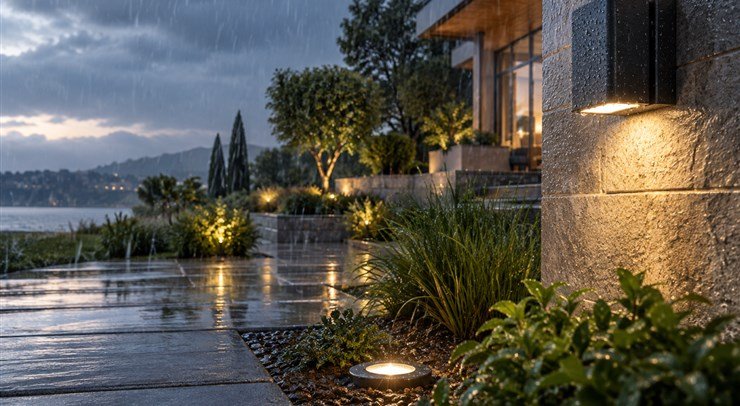
IP ratings appear on almost every outdoor lighting quotation, but many buyers still have the same practical question: is IP65 enough, or should I choose IP67 or IP68? The short answer is that the correct rating depends on where the light will be installed and how it may be exposed to water. A higher number is not automatically the best choice for every product.
This guide is written for importers, wholesalers, lighting distributors and project buyers. It explains what the rating means, where buyers often make mistakes, and which additional questions should be asked before adding an outdoor light to a wholesale range.
What does an IP rating actually tell you?
IP means Ingress Protection. The two digits describe how well an enclosure protects against solid particles and water under defined test conditions. The first digit relates to solids such as dust. The second digit relates to water. For example, the “6” in IP65 indicates a high level of dust protection, while the “5” concerns water jets.
It is important to read the complete rating rather than saying that a product is simply “waterproof” The test conditions are specific. They do not automatically describe every real installation, every cable connection or the long-term effect of chemicals, salt air, ultraviolet light and temperature changes.
| Common rating | Typical meaning in a lighting discussion | Questions still worth asking |
|---|---|---|
| IP44 | Protection suitable for many sheltered or moderately exposed locations. | Is the fitting under a roof, and can rain reach it from the side? |
| IP65 | Dust-tight enclosure with protection against water jets. | How are cable entries, joints and installation holes protected? |
| IP67 | Protection against temporary immersion under specified test conditions. | Will the product actually be placed in the ground or underwater? |
| IP68 | Protection for continuous immersion under conditions specified by the manufacturer. | What depth, duration and installation conditions apply to this exact model? |
IP65: a common choice for exposed outdoor fittings
IP65 is often considered for wall lights, garden bollards, some floodlights and other products exposed to rain and water jets but not intended to sit underwater. It can be a sensible option for a fa莽ade, covered terrace, pathway or garden area when the product is installed as intended.
For buyers, the key is to check the whole system. A well-sealed housing can still have a weak cable gland or an installation hole that allows water into the back of the product. Ask whether the rating applies to the complete fitting, whether the cable is included in the test configuration, and whether the installation instructions specify any requirements for sealing screws or connectors.
If you are selling IP65 products through a distributor channel, make the intended use clear in your catalogue. “Suitable for outdoor wall mounting”is more useful than a bare IP number that leaves the customer guessing.
IP67: useful where temporary immersion is possible
IP67 is more relevant when a fitting may be temporarily submerged, such as a ground light in an area that can flood, or a product installed close to water where the drainage condition is uncertain. It is also common in some inground and landscape lighting applications.
IP67 does not mean that every IP67 fitting is a swimming-pool light. The product may not be designed for continuous underwater operation, pressure, chemicals or a particular depth. If the buyer needs a pool, fountain or pond light, ask for a product designed for that application and confirm the complete installation method.
A frequent mistake is to use an IP67 label to justify an installation that the manufacturer never intended. The body, cable, connector, driver and mounting arrangement should all be evaluated together.
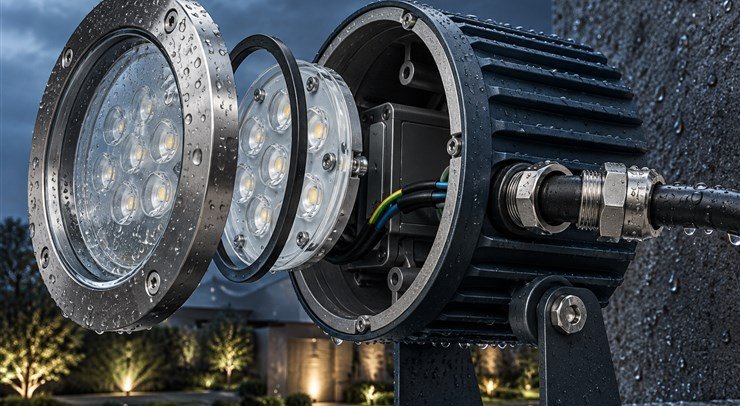
The seal, gasket, cable entry and housing all contribute to real-world protection.
IP68: ask for the conditions behind the number
IP68 is often requested for underwater lighting, but the number by itself does not tell you the permitted depth or duration. Those conditions should be specified by the manufacturer for the exact model. One IP68 product may be designed for a shallow fountain, while another may be developed for a deeper or more demanding installation.
For a project quotation, ask for the product data, installation method, cable arrangement and any requirements for the external driver or transformer. If the water contains salt, chlorine or other chemicals, discuss material and corrosion resistance as well. Stainless steel, gasket material, cable construction and surface finish can affect service life.
When you build a wholesale catalogue, avoid publishing a general claim such as “orks in all water” Instead, describe the intended application and invite the buyer to confirm the project condition. This makes your sales information more credible and helps reduce unsuitable orders.
Why the IP number is not the whole quality story
Outdoor lighting fails for many reasons that are not solved by a higher printed number. Heat, poor drainage, incorrect cable joins, incompatible drivers, corrosion, mechanical damage and installation errors can all affect performance. A product may pass a test and still be damaged if it is installed in the wrong place or modified by the installer.
For importers, review these points with the manufacturer:
- What materials are used for the body, lens, gasket, screws and cable gland?
- Does the test apply to the complete assembled product?
- Are the driver, connector and cable supplied or selected separately?
- Are there installation limits for depth, orientation, temperature or chemicals?
- What maintenance or inspection is recommended?
- Can the manufacturer provide a sample and technical document for approval?
Match the rating to the real location
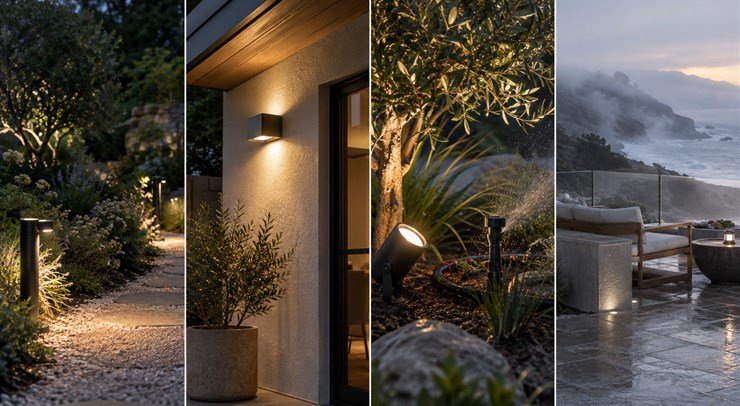
Imagine four products: a wall lamp under an eave, a bollard beside a sprinkler, an inground light in a driveway, and an underwater light in a fountain. They are all “outdoor” but their exposure is different. The wall lamp may need protection from driving rain. The bollard may be hit by irrigation water. The inground light may face standing water and mechanical load. The fountain light may operate in continuous immersion.
This is why the best buying process starts with a photo or drawing. Ask the project team where the light sits, where water comes from, how the cable is routed, what people or vehicles may contact it, and whether the fitting can be serviced. These simple details help the factory recommend a model instead of guessing from a keyword.
Common buyer questions
Is IP68 always better than IP65?
No. IP68 is intended for a different exposure and may cost more or require a different installation. Choose the rating that matches the application and confirm the conditions behind it.
Can I use an IP67 garden light in a swimming pool?
Do not assume that you can. A pool light needs the correct electrical arrangement, materials, cable and installation method. Ask for a product designed and documented for pool use.
Does IP rating include the cable connection?
It depends on the test configuration and the product design. Confirm whether the cable, gland and connector are part of the tested assembly, and follow the installation instructions.
What should appear on a distributor data sheet?
Include the exact IP rating, intended application, dimensions, electrical details, materials, installation method and any limits or accessories. Clear information is more useful than a long list of unexplained numbers.
Make the rating useful for your customers
When a customer asks, “Which IP rating do I need?” the most helpful answer is not a single number. Ask where the product will be installed and what it will experience. Then confirm the model, accessories and installation method with the manufacturer. This approach helps importers reduce returns, helps installers avoid unsuitable products and gives end users a better outdoor lighting result.
Consider corrosion, heat and mechanical exposure too
Water is not the only outdoor risk. A light beside the sea may face salt air, while a fitting near a swimming pool may be exposed to humidity and cleaning chemicals. A dark metal housing in direct sun can become much hotter than the surrounding air. A ground light may also be stepped on, driven over or surrounded by compacted soil. None of these conditions can be answered by an IP number alone.
When you are preparing a wholesale range, separate the questions into three groups. The first group is ingress: rain, spray, dust, standing water and immersion. The second is material: aluminium, stainless steel, glass, plastic, gasket and fastener selection. The third is installation: drainage, cable entry, driver location, heat dissipation, mounting and maintenance access. Reviewing all three groups gives your customer a much more realistic product recommendation.
A simple decision process works well. If the fitting is sheltered and only exposed to occasional rain, start with the product’s intended outdoor rating. If it receives direct spray or is close to the ground, check sealing and drainage carefully. If it may be flooded or submerged, ask for the exact immersion conditions. If it will operate in a pool, fountain or coastal environment, discuss the material and electrical system with the manufacturer before quoting.
How to write a trustworthy product description
For distributors, clear language reduces both returns and unrealistic expectations. Instead of writing “100% waterproof outdoor lamp” describe the fitting as “designed for outdoor wall mounting, with IP65 protection; install according to the supplied instructions” For an underwater model, state the intended application and ask the project team to confirm depth, cable and transformer requirements. This kind of wording is honest, useful and easier for an installer to act on.
Keep the exact rating, test information and application notes with your internal product record. If the product is updated, compare the new version with the approved sample. A small change in the driver, cable gland, face ring or gasket can affect the information that should appear in your catalogue.
Konlight supplies LED garden, inground, pool and underwater lighting for international importers and distributors. Learn about our distributor supply support or send us your application for a product recommendation.




Leave A Comment